30 January 2011

Random Sunday Thoughts

Today at church the theme was meekness and humility. Not particularly popular virtues in today’s self-obsessed society. But I’m glad I went. It has been an extremely demanding couple of weeks and I really needed the spiritual refreshment.

This past week the twins told me they missed being in elementary school. So comparatively carefree and innocent, they said. Not much homework, little responsibility, not nearly as many demands as in middle school. It was a bit of a shock to hear my own kids reminisce about the good old days! They’re not even teenagers yet. But we had a good conversation about stages of life, and escalating responsibilities, and the freedoms and privileges that maturity bestows, if one is wise enough to manage them.

I told them the story of King Henry V (the Shakespeare version) as he walked through his camp the night before the battle at Agincourt, ruminating about who had the better life, a farmer or a king. And when I explained his logic to the twins, they agreed with him that in many ways, the farmer had it better. I told them of one of my favorite scriptures, Ecclesiastes 1:18, “In much wisdom is much grief, and he that increaseth knowledge increaseth sorrow.” That didn’t go over very well! Until I explained what it meant, then they understood.

This is a fascinating stage of life. My kids are just starting to be old enough to have these more serious conversations, and actually comprehend a more mature perspective on such questions. It’s delightful, really. And a nice contrast from last weekend, when we had their friends here for another sleepover, so the house was buzzing with noise and energy and shouts and kitchen cupboard doors banging and food foraging and video games and trips to the pool and all that stuff. It was all great fun, of course. Especially the early morning trip to our favorite beachfront donut shop, then we drove back down the coast, savoring the sea breezes, the view of the waves, the sunshine. With four sugared-up tweens in the car, it was quite a ride.

This morning as I listened and pondered meekness and humility, I was struck by something I heard earlier in the week. Or was reminded of, rather. With the rise of Correlation that’s taken over the LDS Church in the last 40 years or so, more and more the focus has been on obedience obedience obedience as “the first law of heaven.” Lots of encouragement to do things for no other reason than the leaders say so. Fake it till you make it. Don’t stray from the approved lesson materials. Don’t talk about “the mysteries.” Stick to the pre-packaged, pre-approved, nice vanilla flavors that Salt Lake sends out. This will be familiar to every active Mormon.

But wait a minute. The LDS Church sees itself as the modern restoration of part of the House of Israel, doesn’t it? Each person with a patriarchal blessing is told their “lineage” and it’s usually Ephraim, one of the ancient Twelve Tribes. Mormons think of themselves literally as another part of modern-day Israel.

Does anybody remember what the word “Israel” means? It means “struggle with God.” Yeah, that’s right. “Struggle.” Not “obey.” Not “stick to the manual.” Not “don’t discuss the mysteries.” Abraham’s grandson Jacob was renamed Israel because he “struggled”—wrestled, even fought—with an angel of the Lord, and he won.

So it strikes me as supremely ironic that the corporation which asserts that it’s today’s earthly vehicle for gathering the House of Israel should have morphed into a culture so antithetical to the origin of the name. I’ve always taken comfort from the fact that earthly covenants are not made with the organization but directly with God Himself. So I’m sure He will forgive me if I indulge in some of the same struggling, questioning, wrestling even, that Jacob did. After all, Jacob was rewarded for it. And as a parent, I know I am proud of my kids when they ask questions, try to reason things out, demand answers, struggle to understand new things, don’t take pat answers as sufficient, but ask why, what next, what if. How else will they grow? How else will any of us grow?

Seeing that I am straying close to ponderous philosophizing again, I will now veer back toward lighter stuff.

Dinner with a good friend Friday night, his first time with Korean food, which he loved. It won’t be the last time we go there, I’m sure.

We are out of bread again. This means I get the pleasure of waking up real early tomorrow morning and walking to the local bakery for something fresh and warm right out of the oven. It’s less than a buck more than a similar loaf of wheat bread at the grocery store, and it’s made on site just hours before, not in some factory hundreds of miles away two weeks ago and then frozen for shipment. Plus I like supporting local businesses. And the bread from this place is awesome. We had cooler weather, clouds and even a brief downpour this afternoon; hope it’s back to sunshine tomorrow morning. I like morning walks like that, they’re one of the little pleasures that make life great.

The last of the Christmas stuff is finally put away. I love Christmas but I don’t like Christmas decorations in February. And the house looks a lot cleaner. Well, at least till the kids come back. It’s remarkable the places I find kids’ dirty athletic socks sometimes.

I am grateful for washing machines. Imagine if we had to wash all our clothes by hand with a washboard.

The kids love my homemade chicken noodle soup with chicken stock I make from the remains of a roast chicken from the store. I made a particularly good batch today and then proceeded to spill most of it all over the floor. I’m glad I’ve learned to laugh at myself.

And I’m grateful for talented friends, one of whom appears in the video below playing the postlude from church today. I’ve played this piece myself and it’s riotous fun, like a roller coaster. A joyful and fitting end to a wonderful service.


16 January 2011

No, I Don't Know

Well, everybody gets writer's block once in a while. And there hasn't been much to write about lately. Work, time with kids, work. Real exciting.

Church was really nice today. Dr. King's birthday tomorrow was mentioned and I pondered his example of speaking out, his heroism in trying to correct great injustices, change hearts and minds. He is and should be an inspiration to all of us who are trying to do the same. It was good to take the sacrament and really focus on what it means, too. I have friends whose faith or lack of it is all over the map, but for me, nothing in life or the universe makes sense without God or the Savior or the atonement. Which is one of the reasons that as I write this I'm listening to "Praise to the Lord, the Almighty." Sung by the Mack Wilberg era BYU Men's Chorus, of course. ;-) Seriously, it's the best rendition I've ever heard. If I ever do end up in an angel choir, I want it to sound like that.

Kids are not here this weekend, so this evening I took a long walk through the neighborhood, enjoying the evening air, the moon in the east part of the sky and the sunset in the west. As I walked, I read Apronkid's latest post and it really got me thinking. Not specifically about the post, but about how I look at life and the future, what I want, where I want to go and be.

Everybody who's even semi-active in the LDS Church ends up having at least some vague notion of how they imagine the eternities to be, and often it's much like the simplistic organization chart presented in Sunday School. No surprise there. But when I look at the scriptural basis for that picture, I realize how little is actually said about it. A handful of verses in one section of one book. Yet speculation and extrapolation has created a vast body of popular folk beliefs about what all the kingdoms are going to be like, who will be where, what everybody will be doing, etc., etc.

Coming out as a gay Mormon forces you to fracture a lot of stereotypes in your own mind, to say nothing of how it threatens the complacency of others. And one of mine that's fractured is that neatly organized clearly defined picture of the eternities. I've realized that I have virtually no clue how it all works, how it's organized, or anything. With a few historically prominent exceptions easily guessed at, I have no idea how to predict where anybody I know will end up. When I look at pictures taken by the Hubble Space Telescope, ponder the mind-boggling distances in the universe, look at the amount of time that goes into the birth of a star or a planet like ours, it makes me laugh to hear anyone say they know anything about the ultimate destiny of any other person, let alone all of humanity. The hubris!

Now, in the performance-focused Mormon culture where "knowing with every fiber of your being" is the minimally acceptable standard for public statements of faith, admitting such a lack of knowledge is just not done. And a few years ago I wouldn't have done it. I would have clung to The Org Chart of Eternity like a barnacle.

But not anymore. And the bigger difference is this. It no longer bothers me one tiny bit that I don't know. My mom passed away 3 1/2 years ago. Where is she now? I have no idea. I have no doubt that she's somewhere, and I'd like to think that sometimes she's close and checks on me. But I don't know for sure. And that's okay. How do the eternities work? The "many mansions" scripture talks about? I have no idea, and I don't think anybody else really does either. And that's okay.

This is why I say that since coming out, I think my Christian faith and commitment have grown stronger. I no longer have the luxury of drifting along on the Mormon cultural current, content and complacent because I know my appearance makes everyone else think I'm Orthodox Boy. Any honest Mormon will know what I'm talking about and should confess that they've done that too. But now I've broken ranks on a serious issue that LDS theology is not equipped for, and it's no use keeping up appearances anymore. I've had to actually take complete and full responsibility for what I believe, what I have faith in, what I do and don't know. And what I don't know is a lot.

I love Einstein's statement: "The most beautiful thing we can experience is the mysterious. It is the source of all true art and all science. He to whom this emotion is a stranger, who can no longer pause to wonder and stand rapt in awe, is as good as dead: his eyes are closed." So true, so true. And so it doesn't bother me that I can't explain or even confidently predict anything about the future where we're all gonna end up eventually. The world and the universe are so vast and beautiful that I can only conceive of them as gifts and creations of a loving God and a Savior who taught the best way to have happy lives here and hereafter.

So many Mormons are so guilt-ridden with feelings of inadequate performance of duty threatening their exaltation later on that I think they lose the ability to savor and enjoy the delights of this life while they're here. Well, that's not me. In Thornton Wilder's play "Our Town" there's a very poignant scene where the spirit of a young mother, who's just died in childbirth, says goodbye to the town she grew up in and loved. I don't recall exact words, but it was a touching expression of how beautiful the world is, how miraculous life is, how every breath of every day is a glorious gift, and how much she was going to miss all that. I've been blessed with a wonderful life so far and, God willing, I have a lot more left to enjoy. And I plan to do just that.

Years ago, my dad told me his thoughts on this. "When I go for my final judgment," he said, "I'm going to tell the Savior I did my best with what I had. And if that's not good enough, well, so be it. But I will have done my best." I think that's a very healthy approach and I plan to do the same. And until then, live well, love life and my family and friends, never stop learning, savor the mysterious, enjoy each moment as much as possible.

And I'm very much enjoying that Colin Firth just won the Golden Globe for his performance in The King's Speech. If you could have seen that movie but haven't yet, you deserve to be hit with a nasty spell by Draco Malfoy.

05 January 2011

An Apology

Dear Family:

I owe you an apology.

Over the last year or so I have thrown a serious wrench into your expectations and your image of who and what I am. This has been new territory for all of us.

I have had more lead time than you for study, thought, wrestling, debating, and all of that as I've come to terms with being gay and how my life should proceed from here on. It hasn't been my whole life, since for most of my life I was absolutely convinced this was something I must try to kill off and ignore. It's only been in the last couple of years that I've accepted it and planned the rest of life with it in mind. You haven't had quite that long, I know.

And I know it's not fair of me to expect that such a conservative LDS family as ours will be able to change thoughts or opinions on this issue overnight. You all will need time, just as I needed time. So for now, please don't worry about what I said before as far as how I would want a significant other in my life to be treated by the rest of you; there's no such person right now and I don't know when there will be. I never planned to force the issue when it was purely theoretical anyway. Events may play out such that by the time I find him, you all may find your perspectives have actually changed. I think my friend JGW's comment on the prior post is a good one: theory is one thing, but real life experience may prove to be quite different. I hope so.

Meantime, I promise to be more patient. I apologize if I acted badly the other day. I was not prepared for what you said and did not respond in the best way. I recognize that you are all trying to live according to what you believe is right, and I know I must respect that.

I do have one favor to ask. Please, please, please don't refuse to read or listen or learn any more about this topic. The apostle Paul said "prove all things"; that is, investigate, learn, test everything. No exceptions! Please, please, please take his advice, especially about this issue which is now proving to be so crucial to our family unity. Would you at least be willing to talk to a couple of my friends who have been in your exact position? I truly think it would help you feel better.

If there's one thing I learned as I watched Mom battle her illness and slowly slip away from us, it's that the testing and the challenges of life never stop until the very last breath. We really are temporary actors in a play that started long before we stepped onto the stage and which will go on long after we leave. We must each do our best in the role we're given. I know that my coming out has been a challenge for the rest of you and probably will continue to be. But please, please, please don't refuse to learn and investigate and listen to those who've been through this experience.

Growth and change is really hard sometimes. Believe me, I know. I know you are worried, concerned, even fearful of challenges to your beliefs. But remember what Eleanor Roosevelt said: "You gain strength, courage and confidence by every experience in which you stop to look fear in the face. Do the thing you think you cannot do."

Love
Rob

02 January 2011

Where Do I Go From Here?

A wonderful time over the last week with family and friends, despite a three day snowstorm--the three days we were there, of course. Naturally it cleared up the morning we left, and once I got out of the blizzard I felt a lot better. Now back to civilized weather, safe and sound.

On the way home I found a book on the shelf at parents' home, called "So You Want To Raise A Boy?" by the inimitable Cleon Skousen (first published in 1962, and again in 1995). It contains the following:

"18. Aren't some people born homosexuals?

This is so rare that whenever a case occurs it is considered a medical phenomenon. In practically all cases, homosexuality is cultivated [emphasis in original]. Individuals who get into abnormal sex habits during early youth can develop them into such a fixed pattern that they soon think these deviations are perfectly normal. When homosexuals are arrested, they try to excuse their conduct by saying "I guess I'm just made this way." [end of quote]

While visiting there I also learned the following, which I will relate strictly on the facts without editorializing.

Everyone in my family of origin has read this blog and knows of my statements early last year about giving them roughly a year or so to adjust to my coming out, that after that time, I would expect any significant other or partner of mine to be treated the same as any boyfriend or girlfriend or spouse of any of my siblings, and that we would be a package deal.

I was informed that I could do what I wanted with my own life and no one in the family would try to interfere. I was also asked to respect the feelings of everyone else in the family by never mentioning any such personal relationships with any of them, and by not bringing any significant other or partner to any family gatherings. Doing so would make everyone "extremely uncomfortable". If I chose to do so anyway, any display of affection such as holding hands or a kiss would be unacceptable.

Such relationships are abnormal, I was told, and make everyone in the family "feel icky." Normal is a male/female monogamous marriage and sexual relations, nothing else.

I asked the reasons for this feeling. None was given, and I was told none was needed because feelings are feelings and should be respected as such. Had anyone read the materials I offered from www.ldsfamilyfellowship.org written by members of extended families of other gay LDS men and women, material I thought would be particularly relevant to my own family given the same frame of reference, in order to promote understanding and communication? No, the material had not been read; it appeared to take an apologetic stance and the family was not interested in that perspective.

I was told that this request to "respect others' feelings" was not in fact an effort to push me back into the closet and did not represent any homophobia. I pointed out that everyone else in the family was allowed to freely discuss the central personal relationship of their life and have their significant other or spouse welcomed by the family, but I was not, and apparently I must be silent as regards that part of my life if I wished to maintain harmonious relationships with other family members. I said that I simply wanted to be treated like everyone else, and asked why it was fair to single me out for treatment given to no one else in the family. It was acknowledged that this was not fair, but "life is not fair." The family did not wish to see, discuss or be reminded of an abnormal relationship.

I love my family and this conversation made me very sad. And now I have some thinking to do.

25 December 2010

It Feels Like Sunday

It feels like Sunday because I went to church this morning. We've already done the whole presents and stockings thing and the kids are with their mom this week. So I went to church on Christmas morning, following a Christian tradition that goes back centuries if not nearly two millenia. And you know what? It was really nice.

Every year one hears laments about how Christmas has become too commercialized and the "reason for the season" is lost sight of. I know the joke about "Axial tilt is the reason for the season" and think it's pretty funny, but that's not what I'm talking about.

Yet every year Christmas remains as commercialized and frantic as ever. So it was good to actually slow down, spend some time at church on Christmas morning and really reflect and focus on what it's all really about. Focusing on the simple truths. Singing music that was sung on Christmases in Shakespeare's time, and thereby feeling connected to Christians centuries ago who had the same hope I do. That resonates, somehow.

All of this has made this Christmas special in ways I didn't anticipate, and I'm really glad.

24 December 2010

The Journey That Christmas Means

In high school, before my brain was fully formed, I first encountered and hated a certain poem. Later when I figured out what it meant, I once even prevailed on my bishop to let me read it from the pulpit as part of a Christmas program, knowing and savoring the probability that some in the congregation might hate it the way I first did. But anything's better than boredom, right?

This Christmas Eve will be different from most I've had in the past. The kids are elsewhere, the rest of my family is far away. Shortly I will be singing with friends in some wonderful Christmas Eve services unlike those I was brought up with.

It's a good time to ponder and reflect. A good time to go back to this poem I used to hate, but which I now love, and which I'd like to share. I like it because it's not the standard soft, gauzy, sweet-Christmas-carol-in-the-background sentimental sappy treacly retelling of its story. It's rough, gritty, and probably a lot more true to what really happened to the people involved than most other recitations. There are two basic flavors to the Christmas story, you know, and for some reason I've always liked the one about the three kings better than the one about the shepherds.

Naturally, this version was written by the great sage T.S. Eliot. And the thing which most offended me at first about it is now the centerpiece of its meaning that I like the best. Fortunately I've grown up a bit since the days when I was a Boy Scout and sang with my friends "We three kings of Orient are trying to light a loaded cigar. Bang!"

No, I understand things a little better now. Including this poem. Paradoxically, for a Christmas story, it ends by saying that "another death" would be welcome. It wasn't till years after I first read it that I understood what Eliot meant. Not the physical death of someone, but the death of the short-term-focused, self-indulgent, temporal, "natural man" as a result of the journey which the poem describes. In favor of the birth of something--someone--better, higher, loftier. Or at least capable of trying for it. It's the story of one journey, but it's also an allegory for life, and what I believe the Savior makes possible for those who will listen to His message. I hope it will add a new and unique facet to your Christmas.

The Journey of the Magi
by T. S. Eliot

A cold coming we had of it,
Just the worst time of the year
For a journey, and such a long journey:
The ways deep and the weather sharp,
The very dead of winter.
And the camels galled, sore-footed, refractory,
Lying down in the melting snow.
There were times when we regretted
The summer palaces on slopes, the terraces,
And the silken girls bringing sherbet.
Then the camel men cursing and grumbling
And running away, and wanting their liquor and women,
And the night-fires going out, and the lack of shelters,
And the cities dirty and the towns unfriendly
And the villages dirty and charging high prices:
A hard time we had of it.
At the end we preferred to travel all night,
Sleeping in snatches,
With the voices singing in our ears, saying
That this was all folly.

Then at dawn we came down to a temperate valley,
Wet, below the snow line, smelling of vegetation;
With a running stream and a water mill beating the darkness,
And three trees on the low sky,
And an old white horse galloped away in the meadow.
Then we came to a tavern with vine-leaves over the lintel,
Six hands at an open door dicing for pieces of silver,
And feet kicking the empty wineskins.
But there was no information, and so we continued
And arrived at evening, not a moment too soon
Finding the place; it was (you may say) satisfactory.

All this was a long time ago, I remember,
And I would do it again, but set down
This set down
This: were we led all that way for
Birth or Death? There was a Birth, certainly,
We had evidence and no doubt. I had seen birth and death,
But had thought they were different; this Birth was
Hard and bitter agony for us, like Death, our death.
We returned to our places, these Kingdoms,
But no longer at ease here, in the old dispensation,
With an alien people clutching their gods.

I should be glad of another death.

21 December 2010

Walking Through the Cold and Wet

Stuck in this chair all day. I like what I do, but after a full day of it I need to get out. Kids are gone. Nothing much happens Tuesday nights. I need to move, breathe fresh air. It's dark and wet and blustery outside. I pull on a sweater, jeans, and my thick grey overcoat, and venture out.

Clouds overhead reflect back the glow of city lights. Streets wet, drizzling mist in the air. Traffic's light, night is quiet. Air fresh and clean. Christmas lights glint here and there through the trees, up and down the streets. Breezes gust, blow more leaves off the trees to skid and scrape along the sidewalk. I wish I could walk all night long. Soaking in the shiny, misty, cool, fresh tranquility.

Lines from T.S. Eliot, the greatest sage of the 20th Century, come to mind. His "Rhapsody on a Windy Night." Lines like this:

Twelve o'clock.
Along the reaches of the street
Held in a lunar synthesis,
Whispering lunar incantations
Dissolve the floors of memory
And all its clear relations,
Its divisions and precisions.
Every street lamp that I pass
Beats like a fatalistic drum,
And through the spaces of the dark
Midnight shakes the memory . . .

Half past three,
The lamp sputtered,
The lamp muttered in the dark. . .
The reminiscence comes
Of sunless dry geraniums
And dust in crevices,
Smells of chestnuts in the streets,
And female smells in shuttered rooms,
And cigarettes in corridors
And cocktail smells in bars.

The lamp said,
Four o'clock,
Here is the number on the door.
Memory!
You have the key,
The little lamp spreads a ring on the stair.
Mount.
The bed is open; the toothbrush hangs on the wall,
Put your shoes at the door, sleep, prepare for life.

The last twist of the knife."

I love paradox and Eliot captures it so well.

I stop at the local bakery for some orange almond biscotti to have with morning tea. Then the grocery store for some grapes and Stilton for lunch. A cold breeze billows my coat as I walk slowly under the lights hung from the palm trees that seem so out of place in this weather; they should be pines. But those are further down the sidewalk, the few Christmas trees still left on the sidewalk outside the drug store. Especially fragrant just after the rain. And on up the hill, homeward, past the dim street lamps and the memories of going hand in hand with absent children along those same paths. They'll be back. So I wait, and enjoy walks on rainy nights.

20 December 2010

Random Thoughts on a Rainy Night

I've noticed that my blogging has slowed down a bit lately. There are probably several reasons for that. One, just lots of things going on that pre-occupy, and when I stop working at the end of the day I'm really tired. I think for a living, basically, so sometimes the last thing I want to do in the evening is more heavy-duty thinking. Which is kinda why I'm writing this post, I guess. Nobody reads The Brothers Karamazov over and over for fun, right? So I shouldn't try to be profound or think deep thoughts with every post. It's exhausting. So I'm just gonna write down some light extemporania so y'all can see that my life is not all sturm und drang.

The kids are with their mom for Christmas week this year, so we already had "our Christmas." This means all the pressure is off for me, basically, and life has returned to normal. Except the tree's still up, and all the decorations round the house. When I was a kid I loved nothing better than to crawl as close as I could to underneath the Christmas tree and just stare up through the branches at the lights and the ornaments all glistening and glowing, especially if the rest of the room was dark. I kinda still do it, though I don't quite fit under the tree anymore, so I'm on the sofa instead. I think about being a kid again, remembering how it was to be so care-free. But there was a lot I couldn't do, and I was powerless in lots of ways too. Would I go back to that age, if it meant giving up all I've done and learned and accomplished since then? Not a chance. Funny how that works.

One of my favorite days of the year is 22nd or 23rd December, depending on when the winter solstice falls. Because on that date, the days start getting longer again. I love summer best, probably because I grew up on the beach. I love it when the sun doesn't set till 9 pm. One of these days I need to visit Tromso Norway, where one of my great-great-grandfathers came from, just to see the midnight sun; imagine the sun not setting from 21 May to 21 July!

Got hand-made Christmas presents from the kids this year. They don't comprehend why such presents should be so much more special to me than anything they buy, but that's okay. Sooner than I'd like they'll have grown up, and one day they'll have their own kids, and they'll get it.

Still raining outside. I like that I don't have to shovel rain or scrape it off a frozen car after it stops falling. Everything glistens after rain, especially when Christmas lights are reflecting off shiny dark streets and sidewalks and cars and windows.

Run-up to Christmas week. Freeways emptying out, that's nice. Helping out with Christmas music at church. Years ago I got so tired of the same old 15 or 20 songs most Americans think is the sum total of all existing Christmas music, and I started avoiding them in favor of other, lesser-known stuff, mostly from Europe. There's such an incredible wealth of Christmas music out there. Call me a grinch, but I really can't stand "Silent Night." Not that it's a bad song, I'm just so sick of hearing it. I much prefer "Quelle est cette odeur agreable", or "Quem Pastores Laudavere", or this one just below. THAT is my idea of wonderful Christmas music.

12 December 2010

Christmas Letter

Dear Family:

We've decided to start a new tradition and send out an annual Christmas letter! We noticed a lot of you had "other plans" around Thanksgiving so we didn't get to see any of you. Maybe you're following Uncle Dallin's advice? Whatever. We thought you might like to know what the Adam & Steve family have been up to this year.

This is our first Christmas together as a married couple, and some of you may not even know the story of how we met. It happened at an Evergreen Conference about 16 months ago. Adam was the organist and I was in charge of building security that day, and I had to unlock the Joseph Smith Building chapel early so Adam could practice. We started talking, and Adam ended up getting a good amount of practice that morning. Then I had to leave, so he started working on the music.

Adam worked just a few blocks away and started showing up at the JS Building a lot after that. We had a lot in common; both served French-speaking missions, we both like to cook and to play baseball, and both of us have uncles in the First Quorum of Seventy even! Actually, years ago Elder Packer assigned my uncle to attend every Evergreen Conference and report back on everything said and everyone who attended. Elder Packer seemed really interested in those reports. Never could figure out why. Whatev!

Anyway, Adam and I started dating, We'd meet in the JS Building lobby after work and head west for clubbing, or strolling at The Gateway, sometimes we'd catch a Bees game. In fact, that's where he proposed, on the scoreboard during the 7th inning stretch! The whole stadium cheered, even my uncle who was there, and the players waved us down onto the field to run the bases hand in hand. Isn't that romantic! A few guys in suits in the crowd didn't seem too happy but we didn't care.

We got married three months later in Iowa. It was nice to have a few family members there, too bad most of you couldn't clear the conflicts from your calendar. My uncle in the Seventy couldn't go because he was suddenly assigned to the East Africa Area Presidency right after we got engaged. Oh well. At least we had both grandmas there, and they arranged for all the food. It just wouldn't be a Mormon wedding without red punch and sugar cookies and green Jell-o salad afterward. Plus the local ward let us use their chapel, and the Young Women there even decorated it with white roses and pairs of silver rings and pairs of baseball bats!

When we got back to Utah, I was laid off from my job at the JS Building, but quickly got another with much better pay at the U. Adam and I found a beautiful Craftsman place in the Avenues and made it our first home. He's still working at Zion's Bank so we got a killer rate. The bishop of the local ward lives right next door. On weekdays he's as nice as can be, and on Sundays he doesn't seem to know quite what to do with us. Adam is the ward organist of course--so few guys in the Church can play the organ anymore--but the bishop hasn't asked me to do anything yet. It's fun to watch the different reactions at church when we sit together and hold hands or rub each others' backs like the straight couples do!

We had a bunch of the neighbors over for a Christmas party. The Relief Society president said she was going to copy our Christmas decorations, and the Elder's Quorum President couldn't believe I knew more about baseball than he did. He and the Pride Center director served in the same mission and had a great time swapping stories. Small world! The bishop even stopped in for a bit but said it was "unofficial," LOL.

OK, we've saved the best for last. By this time next year Adam and I expect to be parents! We've already started work on an adoption and so next Christmas we will be telling Santa Claus stories and sending family photos to all of you. We told the Primary President, and she was a little nonplussed at first, but then assured us our new addition would be warmly welcomed. So grandmas, we hope you're as excited as we are!

It's Monday night and we're watching the football game for FHE, then we're making fudge to take to the neighbors. We've enclosed a copy of our best wedding photo as your Christmas present. Have a wonderful holiday!

Love
Adam & Steve

08 December 2010

Why They're Stuck

Abelard's latest post related only the latest example of how a large organization with top-down control can stifle creativity in a way that runs counter to the organization's own stated goals. This kind of thing isn't confined to the LDS Church, but it's unfortunate in any organization that tries to be devoted to purposes such as the LDS Church espouses.

Beyond that, though, I was intrigued by Abe's statements of belief that only outside pressure will cause the LDS Church to change its position on homosexuality, that it will never willingly change from within. I've had this discussion with numerous friends who think differently, but I agree with Abe. Yes, there is precedent for the Church to change as a result of internal efforts, but not on issues like this. The last issue of such theological magnitude faced by the Church was polygamy, which the Church agreed to suspend only when its very survival was at stake--due to outside pressures.

For the LDS Church to change its position on homosexuality, it'd have to re-write its current understanding of the "Plan of Salvation" more significantly than has ever been done since Joseph Smith's time. In a church led by revelation, should that be a problem?

Well, ah, yes, I think it would be. Why?

Joseph Smith and Brigham Young were radicals. They were most certainly not cautious or conservative. They shook things up in Christianity like few had ever done before. Joseph was not afraid to say "thus saith the Lord", nor Brigham either.

What do we see from the LDS Church of 2010?

As Daymon Smith recently pointed out, there actually is no such thing as "The Church of Jesus Christ of Latter-day Saints." There is The Corporation of the President of the Church of Jesus Christ of Latter-day Saints, which owns a bunch of subsidiaries like Intellectual Reserve, Inc., which owns the trademark "The Church of Jesus Christ of Latter-day Saints" as well as copyrights to things like hymnbooks, publications, media productions, and so forth. There are other subsidiaries which own real estate, or operate businesses, etc. But believe it or not, there is actually no formal organization that itself bears the name The Church of Jesus Christ of Latter-day Saints.

What we actually have is a family of corporations with very defined business functions. Who runs them? General Authorities who, before full-time church service, were doing what? Well, a lot of them were running corporations, or businesses, or practicing law, or engaged in other high-demand professions. Men who know how to navigate large organizations. And who run the LDS Church in the same way they ran businesses or professional practices in their prior lives. I won't go into detail, but trust me on this. I have worked closely with General Authorities and regional authorities and seen close-up how they operate. I know what I'm talking about.

This is the kind of organization that hires a PR firm to re-design its name logo to try to build more street cred amongst other Christian churches. Which surveys its members as to what they like about the divinely inspired temple ceremonies and then changes those ceremonies based on that feedback. Which concentrates authority over its official messaging in the hands of a small group of "Correlation" employees who are reportedly not above trying to tell senior leadership what they can say and how to say it, in the name of "doctrinal purity."

In short, a church run exactly like a corporation.

Now, think of the corporate business people you've known or seen. Are they radicals like Joseph Smith? Are they risk-tolerant or risk-averse? That's an easy answer. The 1978 Official Declaration extending the priesthood to all worthy men regardless of race was the first clear "thus saith the Lord" since 1890. And its text was pretty vague, even so. Now, 30+ years on, with more corporatization and Correlation having almost completely taken over the church, how risk-tolerant will top management be for any public statement about homosexuality, if they don't have a direct conduit for divine instruction that'll make any such statement fail-safe?

Not very. In fact, I submit, not at all. They're going to run as fast as they can from taking on this issue. There will be conflicting signals from individual leaders but no clear statements from the very top. Because they don't know what to do about it, and as best I can tell, there's been no new inspiration or revelation to settle the question. Nor does it seem top leadership feels much need to consider any changes, in light of Boyd Packer's speech.

This is why I think only external factors will succeed. The Church's inertia on this issue is too tied not only to cultural prejudice but to a theological construct which prevents the kind of change that needs to happen, unless some unprecedented revelation comes that shatters prior understandings. And that, my friends, is something risk-averse corporate managers--who now have complete control of the LDS Church--will never seek.

06 December 2010

Ordinary Stuff

Saturday morning I went to help clean the church. This is not a task that most people relish. But I looked forward to it, and had a great time. Everybody had assigned tasks, of course. I worked by myself, sweeping, dusting, polishing furniture, cleaning doors and windows. Beethoven's 9th blaring in my ears.

I surprised myself a little, even. I knew I wouldn't mind doing it, but I liked it more than I'd expected to. Wonder why. Maybe it's because all my work during the week is conceptual: I write, I think, I read, I talk. That's basically it. I like it of course, but a steady diet of nothing but one thing all the time can get monotonous for anyone. So it was nice to literally get my hands dirty, see something transform from dusty and grimy to clean and shining right before my eyes. Therapeutic, in a way. The sort of almost instant gratification that I don't get very often. And nice to know that I had done my bit to keep the church clean. It was like saying to God "Here's a way I can actually show you that I'm grateful for everything I have, I'll help make Your house clean and neat so that those who come here will feel welcomed and comforted."

I'm struck by little things in life sometimes, ordinary things. Going to the grocery store or the drugstore no doubt seems like mindless drudgery to many, and I understand that. But I like it a lot. My first law firm job after school was in a far-away country which at the time had a very protectionist government; American goods were extremely expensive and hard to find, and local markets were very small and not well-stocked. But from time to time I was able to access the big American grocery store and drugstore on the US Army base, and it was like being instantly transported back home again.

Americans who haven't had the experience of living far away, without all the comforts and conveniences they take for granted, wouldn't fully understand how good we have it here. But I'm glad I had that experience because I have never again taken for granted the countless little things in my life that are good, and convenient, and helpful, and make my life easier and more pleasant. Things as minor as walking into a clean, well-lighted, well-stocked, safe, secure, friendly grocery store. Even today, whenever I walk into one here, I remember what it was like to be in that other country where imported bananas were illegal (I'm not kidding) and a "big" store was maybe 1000 square feet and its selection of goods was mediocre at best. To be surrounded every day here by such abundance, in such safety, is something I don't take for granted anymore. I'm grateful for it every day, and for all the little reminders, the ordinary things, that tell me my life is pretty good.

27 November 2010

Music and Identity

Blog buddy Invictus Pilgrim has recently posted a Youtube clip of a beautiful violin piece that he says portrays all the feelings of his heart as he struggles to find his own soul and voice again after years of near-asphyxiation. I've shared favorite musical bits on my blog before like that, but his post prompted me to share another that has similar meaning for me.

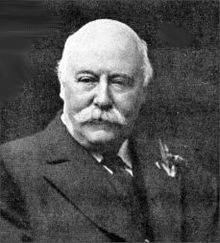
Sir Hubert Parry was one of the finest English composers of the last two centuries. Yet he's virtually unknown in the United States except to aberrational music wonks like myself. This really is unfortunate because he wrote some of the most glorious stuff I've ever heard. Including one that has for me the same meaning as Invictus Pilgrim's violin piece does for him: it "seems to reach directly into one’s soul and issue a challenge to defy fate, to embrace and live life in all its texture, to experience sorrow as well as joy, agony as well as ecstasy, doubt as well as faith; to be – in the fullest sense of the word – human."

The piece which does that for me is the last movement of Parry's 5th Symphony. Curiously, Parry gave rather cryptic names to each movement of this symphony, and the last one, already so perfect a picture of life and its joys and struggles, is perfectly named: "Now." Especially for me. Now, more settled and happy and content than ever before. Now, past so much angst and turmoil, conflicts well-remembered but largely resolved. Now, looking ahead to a future brighter than for most of my life I imagined possible. And Parry's music captures it all, including the challenges and struggles that have led me to where I am, before it ends with some wonderful, brilliant resolutions in shimmering, resounding major chords that practically lift you out of your seat.

Caveat: It's 9 minutes long, and it's not background music. It requires your concentration, but trust me, it's worthy of it. If I could pick one piece as the soundtrack for my life, it'd be this one. Hope you like it.


25 November 2010

Why Is It A Gift?

On Thanksgiving Day before putting the turkey in the oven I want to respond to Invictus Pilgrim's question about how one could be grateful for being gay. He quotes another blogger whose perspectives I don't share, but the questions are worthwhile. I'll answer the questions and then share some of my own thoughts.

1.   Warren’s first statement presupposes that God “makes” some of his sons and daughters attracted to people of the same gender as they.  To paraphrase an infamous question recently posed in General Conference, “Why would Heavenly Father do that?”

In this question we hear the voice of Boyd Packer jousting with the Calvinistic theory that certain people are predestined to certain fates. It assumes what's been called "the magical Mormon world view," a relentless habit of ascribing everything in life, no matter how small or detailed, to divine intent, design or intervention. I think the LDS scriptures themselves belie that notion, particularly Doc. & Cov. with its statements that we are supposed to act for ourselves and that "it mattere[d] not" to the Lord whether early Church leaders did one thing or another.

The question also assumes God could but never would do "such a thing" because it's intrinsically evil and wrong. Apparently those who say this never stop to examine the bases for their premise or wonder whether God might have more to say on the matter. Never mind about the 9th Article of Faith.

I don't think it matters whether God "did such a thing" or not. Evidence is overwhelming that, whatever the reason, being gay is an intrinsic part of one's nature that can't be eradicated (to me, that suggests it is a natural and morally neutral phenomenon, but that's a topic for another time). The only question then is how one can best deal with it. Asphyxiate, stifle, deny, endure, tolerate, accept, value, embrace?

2.    Warren’s second statement goes further, and presupposes that, not only does God “make” certain of his children gay, but that gayness is a “gift,” implying, as Warren so states, that SSA is not a curse, but rather a gift.  How does one come to make such a statement?

I don't accept the premise here. But I do believe one can choose to embrace being gay as a benefit, even a blessing. That too is a long discussion for another time. But I know from my own experience that it's possible. Once I embraced that part of myself, the whole world lit up in glorious technicolor that drowned out all the drab of before. How could that not be a gift?

 3.    If one accepts the fact, which I do, that one is born gay, how does one (particularly he who is steeped in the Mormon faith and culture) come to celebrate his gayness rather than to feel shamed and cursed by it?  Specific instructions would be appreciated.

(a) Stop thinking of it as something shameful. This is a process and will probably require you to reject much cultural Mormon programming as false (which it is).

(b) List all the things that make you happy when you are conscious of the gay part of yourself. Imagine how your life would be without them.

(c) List the ways you think you are a better, kinder, more understanding, intuitive, loving, caring person as a result of being gay.

(d) Think of all the ways you're happier since you started coming out. Of all the art, music, creativity, the beautiful things in life you appreciate more than straight guys might.

(e) Think of all the friends you've made since you started the journey and how they may have enriched your life.

(f) You never could have made your own movie list if you hadn't started coming out.

4.    Moving beyond question #3, how does one come to view it as a gift from God? 

A gift is what we make of it. You have this characteristic as part of you. You can make it into something beautiful and wonderful and fulfilling, or you can make it a source of frustration, stagnation, and unhappiness. How you come to view this characteristic will depend on which of these paths you choose.

5.    I am perplexed by Warren’s statements because he is an active member of the Church who currently serves in a bishopric.  (My intention is not to “pick” on Warren, but simply to use him and his statements as a basis of discussion.)  He “honors” his priesthood and lives his life as a heterosexual priesthood holder living “the plan of happiness.”

Therefore, if gayness truly is something to be grateful for and a gift from God, how does he/one reconcile the dichotomy between living what one truly believes one to be by divine grace [Oxford: “the unmerited favor of God”] versus living the “priesthood path” (straight, married, father, church service, etc., etc.) as taught by the Church?


Within the way the LDS Church has currently framed this issue, no such reconciliation is possible. One must give way to the other eventually. The choice depends on one's priorities, one's trust in the LDS Church as an institution, one's trust in one's own heart and ability to discern personal inspiration.

Concluding thoughts:

Since coming out, my life has been transformed. The old grey world is now aglitter with millions of glowing hues. I feel 100 pounds lighter, free to be my real self rather than being ashamed of it, a reluctant actor on a stage every waking moment. That was exhausting! Friendships are deeper, as is faith. My heart is peaceful, my confidence far higher than before. Especially on this Thanksgiving Day, how could I not consider it a gift?

21 November 2010

Why I Like Clouds and Rain and Cold Sometimes

I know that title may seem strange for a lifelong California beach guy to say, but there is a reason which I'll get to in a minute.

As a lawyer I can't resist a good policy discussion about controversial legislation. So this morning I attended a presentation about Don't Ask Don't Tell at St. Paul's Episcopal Cathedral. Lots of fascinating stuff and three key take-away points for this son of a retired Army officer.

First, DADT is more than just not asking or telling, it has tragic results on individual lives, cutting short promising careers, spending millions to actually reduce military readiness and capabilities at a time when those are not only crucial, but when a majority of military personnel themselves say they'd have no problem with LGB soldiers serving openly. Thus making more and more ridiculous such ostensible mandarins as John McCain, whose bigotry in trying to preserve DADT is increasingly desperate.

Two, DADT is a crashingly discordant exception in American law in that it requires discrimination by the same government which everywhere else must not discriminate.

Third and possibly most disturbing, DADT creates a culture of lying and mistrust. It "belies" who our military is "as an institution", says (just today, ironically) no less a figure than Admiral Mike Mullen, Chairman of the Joint Chiefs of Staff, one of the military leaders whose advice Senator McCain said 4 years ago he'd follow re this issue, and whose advice he is now desperately trying to ignore.

DADT is now part of the Defense Appropriations Bill pending for a vote in the Senate before 10th December's Christmas recess. If you live in a state where your senator(s) support DADT or are undeclared, give their offices a call and them to listen to Admiral Mullen and get rid of this idiotic, tragic law/policy so they'll be on the right side of history and won't be lumped with the McCains of the world.

OK, public service announcement over. 'Cause obviously none of that explains why I like clouds and rain and cold sometime.

Since the DADT presentation ended just minutes before the regular church service started at St. Paul's, and since I have friends who sing in the choir there, I decided to hang around for services. It's a beautiful cathedral and the music is terrific. Very inspirational. The sermon was great, about "the cosmic Christ" and what that concept means for us individually. And I love the smell of that incense.

I didn't have a sweater or jacket. The cathedral is all masonry, floor to ceiling, so it was on the cold side. Outside it was raining and the air was slightly damp. The wooden benches aren't exactly cushy soft. But I found myself happier than I'd been in a long time. Why?

When I was a teenager I was lucky enough to take a couple of trips to Europe with friends. You know how it is when you're 16 and 17 and think you've got the world figured out and you're on the verge of being a legal adult and chomping at the bit to leave home and explore. Thrilled at finally being able to get out of the nest, be on your own, make your own life. Thirsty for adventure.

Well, I was all of that. And spent many weeks filled with that enthusiasm while exploring countries whose histories and culture had always fascinated me. Particularly the cathedrals. Both trips were in the late spring, and at that time of year Northern Europe can still be pretty cold and damp. One particular Sunday we were in Lucerne, Switzerland. It was Easter, actually. There was still snow on the ground and a few flurries in the air. Everything was wet. But it wasn't unpleasantly cold.

Though it was overcast, the clouds had that bright quality by which you could tell the sun was shining behind them. The first few green buds were appearing on the trees. Icicles were melting. The lake was beautiful. I was almost intoxicated with the feeling of such history all around me; this city had existed since 750 A.D., an almost unimaginable history in my hometown where anything over 50 years old tends to get torn down. I walked the covered wooden footbridge over the lake whose eaves were still decorated with the paintings done in the late 1500's when the bridge was built. My friends and I returned twice to admire the statue of the Lion of Lucerne, which we found profoundly touching in ways we couldn't articulate. (I've since learned that others have felt the same.)


And of course, we spent time in a big church. It was Easter, after all. The church was probably 17th Century, from the look of its white & gold German-style Baroque decor. Yep, that one to the left, that's the very one. It was cold, and damp. But the music and the incense and the atmosphere were wonderful. Outside were the first signs of spring. Though it was cloudy, the sky glowed. And there I was, in the middle of this grand adventure, surrounded by all this wonderful stuff, these omens of a bright future. It was a wonderful, exciting, memory-making day that, obviously, I never forgot.

So while it doesn't happen often, today it happened again. All those factors once again converged--the damp, the cold stone church, the incense, the cloudy but glowing sky (with the glow coming through stained glass windows) and I felt that same sense of happiness and gratitude and excitement and gratitude for a bright future. True, since that Easter Sunday in Lucerne I've had a bit of life experience, but there's still a lot of future left to embrace.

And the icing on the cake was when my buddies from the choir collared me in the hall outside afterward to sing some barbershop pick-ups with them, just for fun, on the spot. No written scores, just pick one you know, sing everybody's part through for them, then all together. Short clips. No reason other than the sheer joy of singing with your friends. Can you imagine such a thing happening in an LDS chapel after priesthood meeting? No wonder I like St. Paul's.

Days like this are why I like clouds and rain and cold sometimes.

10 November 2010

In Which Your Local Correspondent Gets Picked Up

Life sure can surprise you sometimes. I got picked up yesterday and didn't even know it. Thanks to Brody for alerting me. And if you want to see just how I got picked up, click here.

09 November 2010

Thank You, One Hundred

Lots of measurements and benchmarks are ultimately kind of arbitrary. New Year's holidays in cultures other than our own may fall at very different times through our year. You can vote and join the army at age 18 but you can't legally have a beer till you're 21 (does that mean we collectively think it takes more maturity to drink responsibly than to volunteer to give your life for your country?). The dividing line between an A and B at school sometimes fluctuates. Life's full of arbitrary measurements that nevertheless manage to give us some structure, some means of assessing progress.

I hesitated a bit to write this post because I didn't want it to come across the wrong way. But then I realized the only reason I can write it is the kindness of other people, and I have an obligation to thank them.

A few days ago, my little blog acquired its 100th self-declared follower. It's been just barely over two years since I started writing here, after Troy urged me to give it a go. I honestly thought it'd be a waste of time and that I'd have nothing to say. What could I possibly have to contribute that would interest anyone else or mean anything to anybody?

Well, obviously I found out. Not that I had anything meaningful to say, but that I was at least capable of churning out content, vapid though it might be. So the blog became a good place to wrestle with issues, express frustrations, put ideas out for discussion, tell a story or two. It's done me a lot of good. And it's helped others waste some time, I'm sure. I'm in a lot better place today than I was two years ago, and a good part of the reason is this blog, the friends I've made as a result of writing, the things I've learned. And it all started from nothing and an honest belief that this was going to be a waste of time.

So when I see that one hundred people have been brave enough to attach their on-line personas to my little corner of cyberspace, nobody is more amazed than me. I honestly never expected anything like that and it is hard for me to believe that many people are interested.

I'm kind of torn. Part of me would much rather do what I can quietly and anonymously. And part of me realizes that sometimes I have things to say and I need to speak out, and this blog is one way to do it. More paradox in my life. As if I needed more.

But I certainly can't complain about the things I've learned, the ways I've grown, the friends I've made and grown to love so much, the experiences I've had, all as a result of blogging here. It's been an immeasurable blessing.

So I now stand with hat in hand before you brave one hundred followers and say a humble thank you. For flattering me by sharing some of your time to read what I write, for your comments and for your friendship. I've no doubt that I have benefited far more by talking with and getting to know and learning from you than you may have by visiting here. I will always be grateful.

30 October 2010

In Praise of Pulchritude

The latest episode of Glee generated some advance media buzz because two of its hottest male stars appeared for the first time with very little clothing on, and during the show both characters were extremely uncomfortable with it. That got me thinking about why, and I realized how many people--guys particularly--would share their sad, overinflated prudery. From time to time there's also some discussion in the MoHoSphere about whether it's morally wrong to appreciate pictures of male beauty (because of the Mormon misinterpretation of the "appearance of evil" thing, a topic for another time).

Coincidentally, I'm reading a book that offers an interesting insight on this point, and I wanted to share.

The book is called Sailing The Wine-dark Sea: Why The Greeks Matter. It's a fascinating look into the culture and the people who became the foundation for all of Western civilization. But despite the incalculable debt we owe to the ancient Greeks for ideas like representative democracy, aesthetics, drama, literature, and more, Judeo-Christian cultures have always been uncomfortable with the ancient Greeks' tolerance and even encouragement of homosexuality and those statues of guys who weren't wearing much of anything.

Most conservative Christians and Mormons, while recognizing the Greeks' artistic and social and political achievements, would probably not choose for their own homes any replicas of such statues. I even heard of one LDS stake president who called Michelangelo's David "pornography." My parents once attended an art festival and purchased an original sculpture, small enough for a tabletop, of a man & woman passionately embracing. Both were unclothed. They put it in the living room. I thought it was beautiful and very tasteful. But apparently somebody from church saw it during a visit and complained to my parents, so they moved it to their bedroom. Apart from the gall of criticizing someone's own choice of art in their own home, I was amazed at the aggressive prudishness. How cleverly diabolical, to persuade someone that the mere sight of God's greatest creation is morally wrong (spare me the "sacred, not secret" bit, that's not the topic here). I understand my parents moving the statue because they didn't want to give offense to any other visitors. To my dad's credit, it's now back in the living room.

Art like that, no matter how tasteful, makes a great many conservative Christians and Mormons uncomfortable. They're baffled by why the Greeks created so many unclothed statues. Their religious tradition's heavy overlay of original sin and the idea that the flesh is corrupt, plus the hysteria that has overtaken modern American society about child molesters and sexual abuse and wardrobe malfunctions in Superbowl broadcasts, all seem to have robbed almost all American Mormons and Christians of any ability to think calmly and rationally about anything less than fully clothed in a way Queen Victoria would have approved. But this book I'm reading gives some compelling insight about why the Greeks created those statues, and why such art resonates with gay guys particularly. And I think also answers the MoHo question about appreciating depictions of male beauty.

Many straight people assume that gay people's attraction to those of their own gender is merely "abnormal" and "unnatural" lust, thus any appreciation of the physical form of someone of one's own gender must also be "abnormal" and "unnatural." Apart from the fact that this is just plain wrong, it is also demeaning and dehumanizing.

In fact, there is another aspect, much loftier, that's perfectly captured by the Greek statues and any art that follows the same lines, as so well put by the author of Sailing The Wine-dark Sea. It is that those statues capture an ideal:

"The kouros [statue of a young man, unclothed] is the Greek in his idealized state, eternally young, eternally strong, but fixed for all time--not in process, not on his way from boyhood to manhood, but eternally achieved, eternally One. As the ultimate ideal, he must be naked, for no costume but his own skin could serve his eternality. . . . Forever beyond all development (which would necessarily imply disintegration at a later stage), he belongs to the World of the Forms. He is the Form of Man, the perfection, of which all beautiful and heroic men partake as partial examples, the man that all men would wish to be.

The kouros, then, is not merely the expression of a Greek idea but of a profound human longing that the Greeks were the first to uncover and that reverberates through art and literature ever after . . . the wish to be absolved . . . from the "change and decay in all around I see"--and its expression in notes high and low, in measures quick and slow--whether in Homer's lost utopias of Troy and Ithaca or in Sappho's plangently expressed desire for youth and regret over age, whether in Socrates' earnest aspiration to "shuffle off this mortal coil" and ascend to the World of the Forms or in the molded pathos of the kouros--is Greece's most complex and valuable gift to the Western tradition. . . . The kouros . . . speaks with one authoritative voice: "Here is our ideal, the best we have to offer."

That's why that cork-brained stake president I mentioned before was so laughably, pitiably wrong about Michelangelo's David. It, and those Greek statues, are actually homage to perfection (and aren't Mormons supposed to be trying to achieve perfection?), to the pinnacle of the Creator's art--in fact, they try to depict what I'm sure most Mormon men hope to be after the resurrection. They are reminders of what all of us partake in, partly, and of what we might hope to approach through dedicated care of the divine gift of corporeality. They represent a longing for the eternal, for youth and beauty to stay that way forever.

Gay guys get this; it's intuitive. But you don't need to be gay to understand it. I am sincerely sad for anyone who can't see this perspective, who may be so bound down by the traditions of their gymnophobic fathers that they can't comprehend this reverence and appreciation but remain stuck in the attitude that all such depictions are necessarily base and obscene. In fact it is that attitude which dishonors both the Creator and His creation.

Mormons are fond of the truism "As a man thinketh, so is he." So to anyone, Mormon or otherwise, who thinks these statutes or the "David" or anything like them are porn and obscene, I say get your minds out of the gutter and show more respect not only for others but for the Creator's work. Thomas Cahill, author of Sailing the Wine-dark Sea, is right; such art captures a way of thinking that honors divinity, invites us to aspire and achieve, and fills our lives with beauty. It's not porn, it's perfection. It's not shameful, it's sacred. It's not degrading, it's a celebration of the divine gifts of life and creation.

DAC Epidemic

Seems there is a never-ending stream of news stories about new and various health disorders of all kinds, physical and mental. I ran across one a while back that I've realized is quite widespread among a certain segment of the population and I wanted to bring it to everyone's attention because this one I think we can actually do something about.

DAC is rather unusual. It's an acquired syndrome, and like other mental conditions is not physically painful to the person who suffers from it. But it is detrimental all the same, because over time it changes and warps the sufferer's perspective and ability to deal with others on an equal level. Those who are afflicted with this unfortunate condition usually acquire it through no conscious choice, of course. Normally it results from repeated exposure to those who display similar behavior, especially authority figures.

DAC is insidious because it also hurts others: those with whom the DAC sufferer interacts and treats in abnormal, patronizing, and sometimes even pejorative ways. DAC sufferers are usually not aware of the damage they do, but it happens all the same. I've seen it myself, and it's all the more sad because DAC is totally preventable and can be eradicated so easily.

Oh, I just realized I didn't identify DAC fully. DAC stands for Disparaging Acronym Compulsion. It's found most often among conservative Evangelical, Catholic, and Mormon groups, and its most common example is relentless use of the dismissive acronyms SSA and SGA. I've written elsewhere about why these are bad.

My heart goes out to those who suffer from DAC. Just having DAC is no sin, though acting on it certainly is. I realize that many people with this condition will not be able to free themselves of it in this life as long as religious authorities perpetuate DAC. Some will be able to control their behavior despite having DAC, and I salute them for their heroic struggle, because DAC can be a powerful urge. But with regular reminders and doses of truth, it can be controlled. Certain geographical areas are more susceptible to it, like Utah Valley and Mesa Arizona, and ultimately more drastic public measures may be necessary there to curb the spread of DAC and its dolorous effects.

But for now, the best we can do for DAC sufferers is to be compassionate, understand that their situation's not entirely of their own making, try to help them be strong and overcome DAC's sad, relentless urge to euphemize.

23 October 2010

Tough Situation, Tough Words

I've noted previously that members of the Church of Jesus Christ of Latter-day Saints place huge cultural emphasis on being nice and that they hate, hate, HATE to be the bad guys in anything.

So exchanges like the one I'm going to provide here will be extremely difficult for good-hearted, faithful, well-intentioned, prophet-following Latter-day Saints to read. But there's a lot at stake, and I truly believe that all such Mormons need to seriously consider the viewpoint stated by columnist and radio personality Dan Savage below.

The exchange started with a letter from a devout, sincere Christian who said this:


Dear Dan:

I was listening to the radio yesterday morning, and I heard an interview with you about your It Gets Better campaign. I was saddened and frustrated with your comments regarding people of faith and their perpetuation of bullying. As someone who loves the Lord and does not support gay marriage, I can honestly say I was heartbroken to hear about the young man who took his own life.

If your message is that we should not judge people based on their sexual preference, how do you justify judging entire groups of people for any other reason (including their faith)? There is no part of me that took any pleasure in what happened to that young man, and I know for a fact that is true of many other people who disagree with your viewpoint.

To that end, to imply that I would somehow encourage my children to mock, hurt, or intimidate another person for any reason is completely unfounded and offensive. Being a follower of Christ is, above all things, a recognition that we are all imperfect, fallible, and in desperate need of a savior. We cannot believe that we are better or more worthy than other people.

Please consider your viewpoint, and please be more careful with your words in the future.

—L.R.


I'm sure there are countless Latter-day Saints who could have said exactly the same thing to Mr. Savage, and truly, honestly believe every word of defense of their own good faith and intentions. I am sure all such persons believe they really are trying to follow Christ.

Now, here's the tough part. Mr. Savage's words will not be easy for any such Christians to read, much less give good faith consideration to. But I think they must, if the current epidemic of gay-bashing and bullying and suicides is going to be stopped and not repeated.

To members of my own extended family in particular, I know you read this blog. You will probably want to take great offense at Mr. Savage's words. I beg you not to do that. Please try to set those feelings aside and give every possible consideration to what he says. That's the only way you'll be able to understand how I and so many others look at not only this issue, but at protestations by LDS and other Christians that they really don't mean anything hateful or bigoted or discriminatory when they fight against gay marriage or continue acquiescing to so much of what is believed by Christians and Mormons about gay people. The LDS Church has recently stated over and over again that it desires civil dialogue and discourse. Good. I'll take the Church at its word, and say that all its members who supported Proposition 8 need to read what Mr. Savage says, take it to heart, and really try to understand how they come across and what results from their words and beliefs.

OK, here goes:


Dear L.R.:

I'm sorry your feelings were hurt by my comments. No, wait. I'm not. Gay kids are dying. So let's try to keep things in perspective: F--k your feelings.

A question: Do you "support" atheist marriage? Interfaith marriage? Divorce and remarriage? All are legal, all go against Christian and/or traditional ideas about marriage, and yet there's no "Christian" movement to deny marriage rights to atheists or people marrying outside their respective faiths or people divorcing and remarrying.

Why the hell not?

Sorry, L.R., but so long as you support the denial of marriage rights to same-sex couples, it's clear that you do believe that some people—straight people—are "better or more worthy" than others.

And—sorry—but you are partly responsible for the bullying and physical violence being visited on vulnerable LGBT children. The kids of people who see gay people as sinful or damaged or disordered and unworthy of full civil equality—even if those people strive to express their bigotry in the politest possible way (at least when they happen to be addressing a gay person)—learn to see gay people as sinful, damaged, disordered, and unworthy. And while there may not be any gay adults or couples where you live, or at your church, or in your workplace, I promise you that there are gay and lesbian children in your schools. And while you can only attack gays and lesbians at the ballot box, nice and impersonally, your children have the option of attacking actual gays and lesbians, in person, in real time.

Real gay and lesbian children. Not political abstractions, not "sinners." Gay and lesbian children.

Try to keep up: The dehumanizing bigotries that fall from the lips of "faithful Christians," and the lies about us that vomit out from the pulpits of churches that "faithful Christians" drag their kids to on Sundays, give your children license to verbally abuse, humiliate, and condemn the gay children they encounter at school. And many of your children—having listened to Mom and Dad talk about how gay marriage is a threat to family and how gay sex makes their magic sky friend Jesus cry—feel justified in physically abusing the LGBT children they encounter in their schools.

You don't have to explicitly "encourage [your] children to mock, hurt, or intimidate" queer kids. Your encouragement—along with your hatred and fear—is implicit. It's here, it's clear, and we're seeing the fruits of it: dead children.

Oh, and those same dehumanizing bigotries that fill your straight children with hate? They fill your gay children with suicidal despair. And you have the nerve to ask me to be more careful with my words?

Did that hurt to hear? Good. But it couldn't have hurt nearly as much as what was said and done to Asher Brown and Justin Aaberg and Billy Lucas and Cody Barker and Seth Walsh—day-in, day-out for years—at schools filled with bigoted little monsters created not in the image of a loving God, but in the image of the hateful and false "followers of Christ" they call Mom and Dad.


Tough words. I stress that I am not directing these to any individual person in my family or otherwise. They are a general example of what I believe is a valid response to Christian protests that no hate or bigotry is ever intended, only love. Like it or not, Mr. Savage is responding to things like Boyd Packer's descriptions of homosexuality as "unnatural and immoral" because that's how those descriptions came across.

I know this puts particularly LDS people in a hopeless position, caught between their faith's demands that they follow the teachings of someone they accept as an inspired leader, yet sincerely wanting to be compassionate as well. Mr. Savage's words correctly point out that there really is no reconciling those two positions successfully.

And guess what. That's exactly the position many gay Christians, LDS or otherwise, find themselves in. Absolutely no way to successfully harmonize what their churches teach and what they know of themselves. So, faithful Mormons and other Christians who want to be true to your faith but can't stand to think of yourselves as bigots or haters, how does it feel to be caught in a dilemma not of your own making where you know you face feeling or inflicting hurt no matter which way you go? Do you understand a little more now?

Maybe that realization will help a few LDS and Christian hearts and minds understand the position of their gay brothers and sisters who want to be faithful. Maybe they'll be a little more willing to set aside defensiveness and really listen and consider that perhaps something other than the ostensible love is actually getting through and having an effect, while whatever love there may be is falling short. (To be fair, as I've said before, some of the most truly Christlike people I've ever met have been active Latter-day Saints. There needs to be more such people.) I hope those who can actually see that will then consider how to change and grow so this horrible epidemic can be stopped for good.

The only way to break those deadlocks is to prioritize. What's going to win out? Dogmatic judgment or Christian charity? How did Jesus prioritize? I think most people know. Your neighbor as yourself, and all that, right? And what did Paul say the greatest of all virtues was? Actually, breaking this deadlock shouldn't be hard at all.